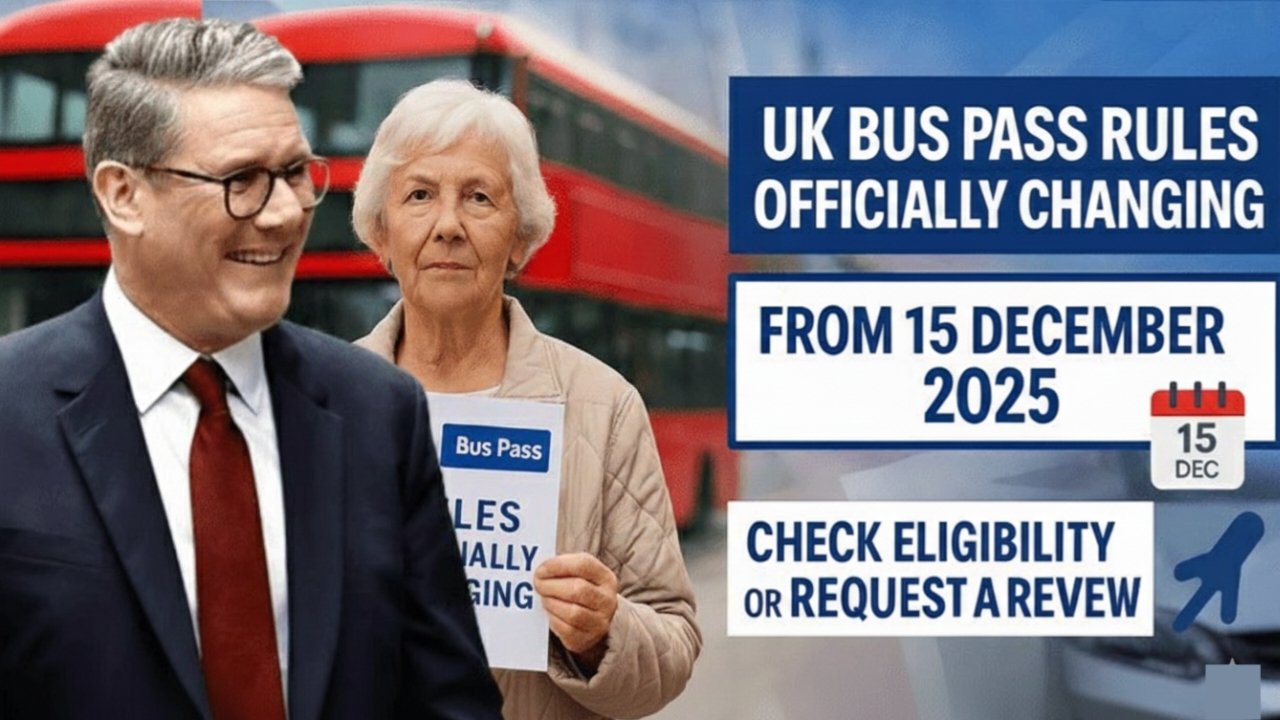
Public transport has always played a crucial role in the lives of people across the UK, especially for older residents and those who depend heavily on concessionary travel to manage daily costs. When news broke that the UK Bus Pass Rules are officially changing from 15th December 2025, many people immediately felt concerned because any change in eligibility affects their day-to-day life. Whether it’s attending GP appointments, travelling to work part-time, visiting family, or simply managing essential errands, the free bus pass isn’t just a benefit — it’s a lifeline. That’s why understanding these rule changes in clear and human terms is essential. With rising living costs already pressuring UK households, people want accurate, realistic information, not confusion caused by rumours and misleading headlines.
What Exactly Is Changing From 15 December 2025?
From 15 December 2025, the UK Government will fully align older-person bus pass eligibility with the State Pension Age (SPA). This means the previous system — under which many people in certain areas qualified for a free bus pass at age 60 — will be phased out. Instead, your eligibility will be based on when you reach the official pension age, which for many UK residents is now 66, and for younger generations may rise to 67. This shift significantly delays when people can claim their older-person free bus pass. For many households already struggling with the cost of living, this change means waiting several more years for a benefit they always assumed would begin at 60. And that delay impacts financial planning, early retirement decisions, and even health-related travel needs.
How This Change Affects People Across England, Scotland, Wales, and Northern Ireland
Although the December 2025 change is focused mainly on England, the impact varies depending on where you live in the UK. Transport policy is devolved, meaning each nation sets its own rules.
In England, the change is direct and immediate — older-person bus passes will now strictly follow State Pension Age.
In Scotland, the 60+ free bus pass scheme still exists, but financial pressures mean long-term reforms may be considered.
In Wales, residents currently receive free bus travel from 60, but the government has previously discussed reviewing the concession to manage rising costs.
Northern Ireland offers free travel at 60 under SmartPass rules, but like Wales and Scotland, future changes are possible.
So, while England faces the most immediate impact from December 2025, the rest of the UK is watching closely as governments assess the rising burden of subsidised public transport during an inflation-heavy period.
Why the Government Is Making This Change Now
The government’s reasoning behind the December 2025 update is tied to financial sustainability. With people living longer and relying more on public services, the cost of concessionary travel continues to increase. By aligning the bus pass with State Pension Age, the government aims to reduce pressure on transport budgets and ensure long-term affordability. But while this explanation may make sense from a policy standpoint, it does not change the fact that thousands of UK residents in their early 60s still struggle with rising prices, declining work options, and increased healthcare needs. Many people feel the government’s decision prioritises budget over wellbeing, especially at a time when every penny matters.
What UK Residents Need to Know Before the Rule Takes Effect
For those already receiving a bus pass, nothing changes — you will continue using it normally.
For those approaching 60, the most important point is this: you will not receive a free older-person bus pass until you reach State Pension Age.
If your SPA is 66 or 67, you must wait until then.
This affects people planning early retirement, those with health conditions who rely on bus travel, and those budgeting for the next few years. Planning ahead is now more important than ever because the rule change removes an expected support that many people have relied on for decades.
Who Will Still Qualify for Other Bus Passes?
It’s important to remember that not all free travel schemes are disappearing. Disabled Person’s Bus Passes are not affected by the December 2025 change, and people with qualifying disabilities will continue to receive free or discounted travel based on medical evidence rather than age. Additionally, some local councils may still offer companion passes or discretionary schemes for vulnerable residents. However, older-person bus passes based solely on age will now follow the pension-age rule nationwide in England.
How to Apply for a Bus Pass Once You Reach Eligibility
When you finally reach the qualifying age, applying for your bus pass remains simple. Most councils allow online applications where you upload a passport-style photo, proof of age, and proof of address. Approval is typically fast, and your bus pass is delivered by post. For those who prefer offline methods, councils still accept in-person or postal applications. The key is to apply directly through your local authority’s website, not through third-party apps that may charge unnecessary fees.
Why This Change Feels Personal for Many UK Residents
For many UK households, the older-person bus pass isn’t just a perk — it’s a symbol of dignity, independence, and recognition that people who worked their whole lives deserve support as they age. Losing access to it for an additional six or seven years feels like losing a small but important part of social support. The timing also frustrates many, as the cost of transport, fuel, and basic necessities continues to rise. UK residents want stability, not uncertainty, and a change like this feels like one more burden placed on everyday people just trying to get by.
Final Thoughts for UK Readers
As December 2025 approaches, the most important thing UK residents can do is stay informed through trusted sources. The rule change is real, and it will significantly affect when people qualify for free travel in England. Understanding these new rules helps you plan realistically, avoid misinformation, and prepare for how the shift may affect your household budget. While this change may feel disappointing to many, staying aware ensures that when you do reach pension age, the application process will be smooth and straightforward.