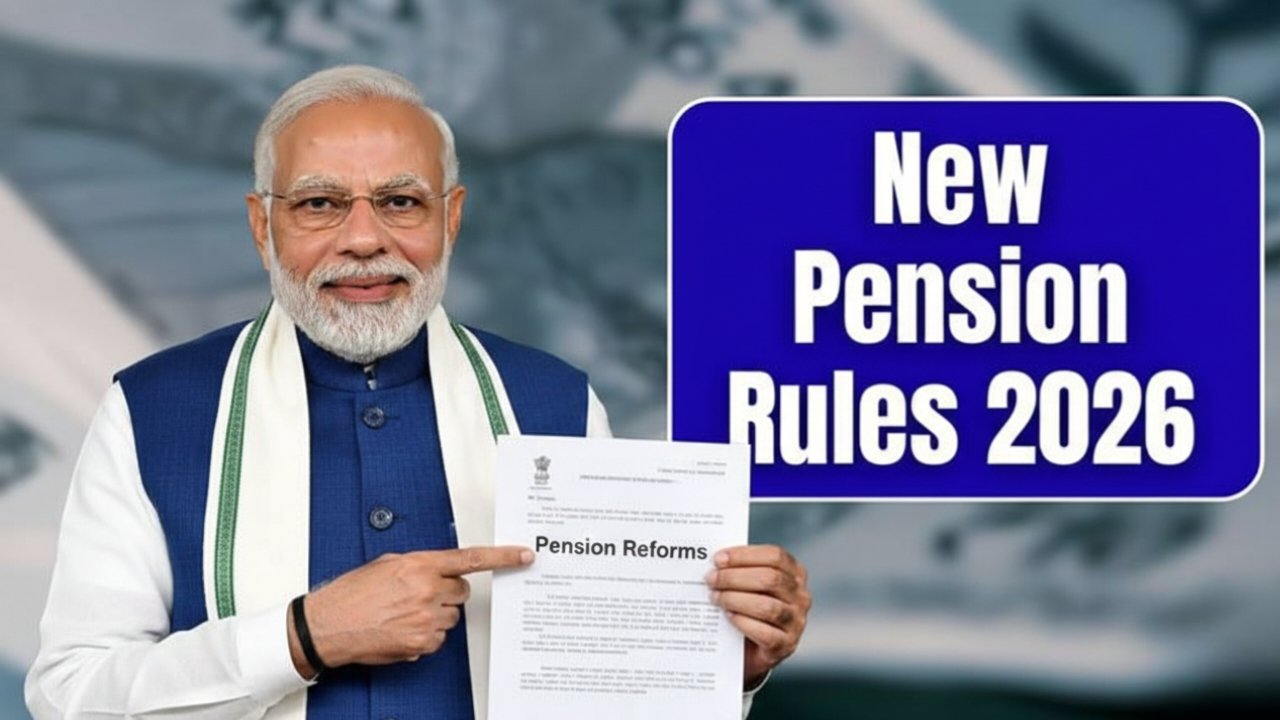
The government has finally declared the most awaited New Pension Rules 2026, and it is already being considered one of the biggest welfare changes for financially dependent citizens. After months of discussions, economic review, and public demands, the new pension reforms have been designed to offer greater security and long-term benefits to senior citizens, widows, and disabled individuals. The central focus of the new policy is to reduce financial stress and help people maintain dignity even if they are unable to earn. Unlike earlier schemes where the amount barely supported daily expenses, the new rules aim to bridge this gap with revised pension value, medical benefits, and digital payment improvements. Citizens are slowly realizing that 2026 could be the year when India finally steps toward a more reliable social support system.
The latest update also shows the government’s intention to uplift vulnerable communities with monthly guaranteed income, social inclusion support, and better grievance redressal. Apart from the financial assistance, additional benefits like medical insurance coverage, doorstep digital verification, and fast-track approvals are being introduced for the first time. These rules have been drafted to avoid delays and ensure every eligible beneficiary receives their share without high documentation or repeated paperwork.
New Pension Rules 2026 (Summary Table)
| Category | Benefits Under New Rules 2026 |
|---|---|
| Pension Scheme Name | National Social Security Revised Pension Scheme 2026 |
| Applicable From | April 2026 |
| Senior Citizen Pension | ₹1,500 to ₹4,200 monthly (State-wise slab) |
| Widow Pension | ₹1,800 to ₹3,800 monthly |
| Disabled (PwD) Pension | ₹2,000 to ₹4,500 monthly |
| New Medical Benefits | ₹2.5–5 lakh Government Health Insurance Support |
| Official Registration | Social Welfare Department/State Govt Portal |
Why Were New Pension Rules 2026 Introduced?
For many years, pension beneficiaries complained that the old pension amount was too low to meet daily living expenses. The rising cost of essential items such as vegetables, medicines, travel, and electricity made it nearly impossible to survive on outdated pension values. According to government estimates, an average senior citizen spent more than ₹3,400 per month merely on medicines and basic healthcare. In such a situation, a minimum pension of ₹1,000 or ₹1,200 under old schemes was clearly insufficient. This gap became a matter of concern, especially during health emergencies when elderly individuals struggled to afford proper medical care. The financial gap encouraged the government to restructure the pension system with sustainable monthly assistance.
The New Pension Rules 2026 were also introduced to unify state and central support into a single structured system. Earlier, each state followed its own pension rates, often creating disparities and confusion among citizens. Many states paid too little, while others offered better support. This inequality raised strong demands for uniform reforms. Therefore, the government decided to revise pension eligibility, documentation requirements, payment methods, and income thresholds so that support can reach more people in need. The decision aligns with global welfare standards and aims to bring Indian pension policies closer to modern social protection models.
New Pension Rules 2026 For Senior Citizens
One of the strongest updates in the New Pension Rules 2026 is the revised pension amount for elderly individuals aged 60 and above. Under the new rules, senior citizens will receive a monthly minimum ranging from ₹1,500 to ₹4,200 depending on their income category and state slab. The payment structure is divided into general support, special medical-category support, and poverty-line support. The government aims to ensure that no elderly individual is left without sufficient monthly funds to survive with dignity and independence.
In addition to monthly assistance, free annual health checkups, subsidized medicines, and hospital care subsidies are being included under the national health benefit add-on. Earlier, senior citizens depended heavily on family members or private medical loans for treatments. Now, up to ₹5 lakh per person will be covered under government-backed health insurance if they are registered for the pension program. This policy change is expected to ease financial pressure during medical emergencies and encourage better healthcare monitoring for aging individuals across the country.
Widow Pension Benefits Under New Pension Rules 2026
Widows from economically weaker households have always faced greater challenges due to lack of income, social support, and financial independence. The New Pension Rules 2026 have addressed their needs with special pension benefits ranging from ₹1,800 to ₹3,800 monthly, along with immediate assistance in sudden health or legal issues. Many widows also lose property or financial rights after their spouse’s death, leaving them dependent on relatives. The new pension scheme aims to reduce such dependence by ensuring direct bank payments without middlemen.
The government has also introduced a widow support fund that provides one-time relief grants for urgent medical or legal expenditure. Additionally, widows will receive priority in welfare housing, employment training programs, and small business financial aid if they wish to restart earning. These benefits are expected to empower widows to become financially self-sufficient and face society with confidence rather than fear of income insecurity.
Disabled (PwD) Pension Benefits Under New Pension Rules 2026
The disability pension has been strengthened under the New Pension Rules 2026 with revised benefits ranging from ₹2,000 to ₹4,500 per month depending on the severity of disability. The scheme now includes support for people with physical disabilities, cognitive disabilities, autism spectrum conditions, visual impairment, and severe hearing loss. Unlike earlier rules, beneficiaries no longer need repeated physical medical verifications every year. Digital verification using government health IDs and Aadhaar-based certification reduces the stress and travel costs for disabled individuals.
One of the most important benefits under the new rules is free mobility support and hospital reimbursement. Disabled individuals will receive priority medical access, rehabilitation assistance, and financial support for purchasing mobility devices like wheelchairs, crutches, or hearing aids. For young disabled individuals who wish to work from home, the government will also provide financial tools, digital skill training, and work-from-home employment support programs. This approach promotes independence and helps disabled citizens contribute productively to society.
Digital Pension Verification & Faster Approvals
Old pension schemes often suffered delays due to repeated documentation, physical verification, and slow departmental processing. Under the New Pension Rules 2026, a complete digital verification system has been introduced to simplify applications. Eligible citizens can register through state government portals without visiting offices repeatedly. Digital identity checks using Aadhaar, medical certificates, income data, and bank information will speed up approvals. This system also reduces corruption and prevents unauthorized claims.
Additionally, pension holders will receive SMS alerts for approval status, payments, and renewal reminders. Annual re-verification will be done online, and doorstep biometric visits will be available for individuals unable to travel. The goal is to make pension benefits accessible, transparent, and corruption-free for all categories of beneficiaries.
Who Is Eligible Under New Pension Rules 2026?
Eligibility for the New Pension Rules 2026 is divided into multiple categories based on age, disability level, and income threshold. Below are the key eligibility criteria:
- Senior citizens aged 60 years or above
- Widows from BPL or low-income households
- Individuals with physical or intellectual disabilities (40% and above)
- Monthly income must be below the notified limit (varies by state)
- Valid Aadhaar, bank account, and identity proof
- Digital medical certificate for PwD category
These requirements ensure that only genuinely deserving individuals receive financial support, while avoiding misuse of welfare funds.
How to Apply for Pension Under New Rules 2026?
Applications can be submitted through state Social Welfare portals or local government service centers. Applicants need basic ID documents, income certificates, and valid bank information. Once documents are verified digitally, approval is completed within 10–20 days under the fast-track rules.
Beneficiaries will receive their first payment automatically via DBT (Direct Benefit Transfer). Those who face difficulties with online applications can use assisted kiosk services in local offices. During registration, citizens are advised to keep mobile numbers active to receive alerts.
Conclusion
The New Pension Rules 2026 reflect a major step toward building a strong welfare support system in India. By increasing pension amounts, offering medical coverage, simplifying verification, and prioritizing vulnerable groups such as widows and disabled individuals, the government has clearly focused on reducing financial insecurity and improving dignity of life. If implemented effectively across all states, this policy has the potential to transform social security benefits and bring meaningful change to millions of households relying on government assistance.