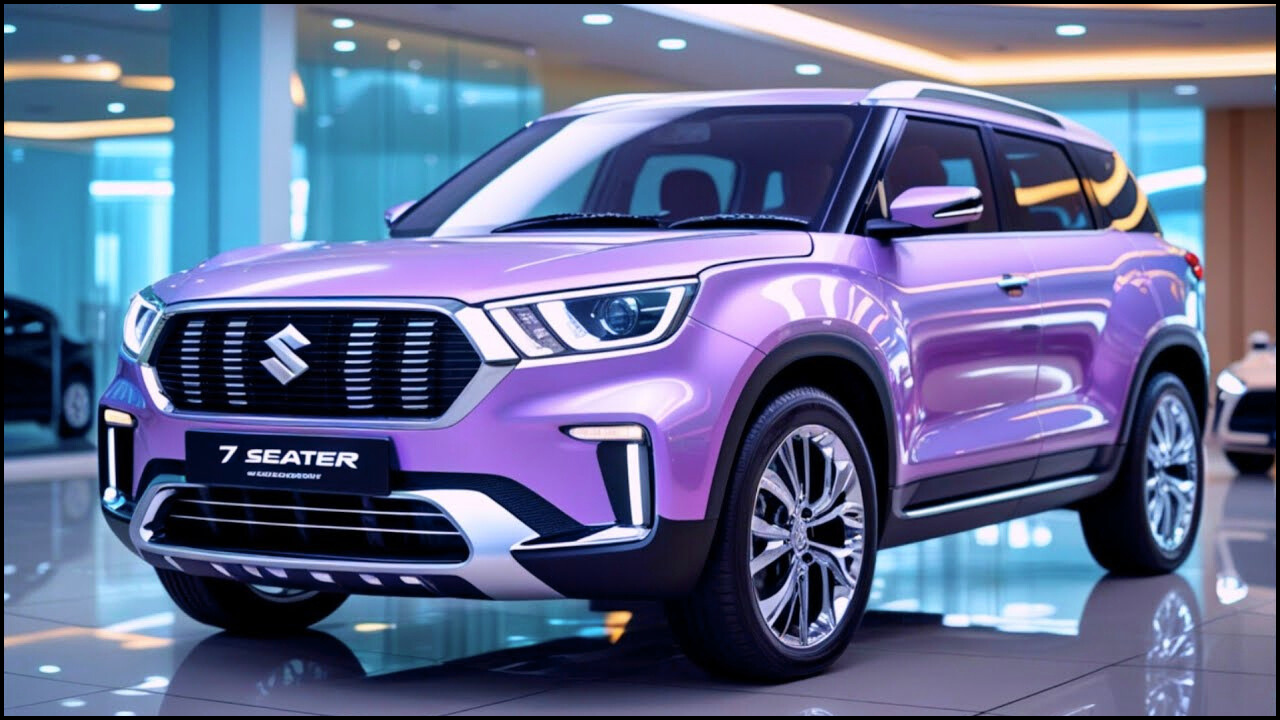
When you first read the headline “Get a 7-Seater Family Car for ₹60,000 only, easy EMI of ₹8,500 per month”, it feels almost like a dream crafted for middle-class Indian families. You imagine yourself negotiating at a showroom, paying a modest ₹60,000, and driving home a full-sized MPV capable of carrying your entire family — children, parents, occasional relatives, and even luggage for a weekend getaway. For many households, especially those with tight budgets and frequent travel needs, this seems like the perfect gateway to car ownership. But as with so many such offers that sound too good, there are questions that demand thoughtful answers: Is this genuinely realistic? What will be the hidden costs? Will the car actually deliver value over time? In this article, I examine the offer in depth, explore its plausibility, point out what to watch out for, and help you decide whether this 7-seater car deal might really suit your family’s future.
What Exactly Does the Offer Claim?
According to the advertisement circulating widely on social media and some dealer networks, the scheme works like this: pay a down payment of only ₹60,000, and take home a 7-seater MPV / family car. The rest of the payment is arranged on easy EMIs of ₹8,500 per month over a certain loan period — typically 5 to 7 years. The headline is intentionally designed to grab attention; ₹60,000 is low enough to feel affordable, and ₹8,500 per month seems manageable for many working families. On paper, for a total on-road price somewhere around ₹6–7 lakh (depending on model, state taxes, registration fees, and other charges), this structure appears feasible: the down payment covers a fraction, and the monthly EMIs spread out the rest of the cost, making the car seem like a smart investment rather than a financial burden.
For many buyers, this offer feels like a ticket to convenience, comfort and mobility without draining their immediate savings — which is why it stirs hope among thousands.
Which 7-Seater Cars in India Could Fit This Scheme (Realistically)?
To imagine how this offer might work in reality, you need to look at what 7-seater cars in India usually cost and which models are candidates for a low-down-payment EMI scheme.
Budget-friendly MPVs such as Renault Triber often appear in the lower end of 7-seater pricing; in many states, with basic features and essential registration, they hover around ₹6 lakh to ₹6.5 lakh ex-showroom (before taxes, insurance, registration etc.). Similarly, older or used 7-seater vehicles — compact MPVs, small vans, or older generation cars — can sometimes come cheaper. These models, with minimal frills, could theoretically slip into a scheme where ₹60,000 down payment plus monthly EMIs becomes financially viable.
Used cars also become part of the equation. If a family opts for a well-maintained second-hand 7-seater, the overall loan amount may reduce, making monthly EMIs manageable. However, such cars often require more maintenance, may have higher running costs, and demand careful evaluation of their mechanical and legal condition before purchase.
Hence, realistically, the offer may suit either a lower-end new MPV with minimal extras or a used 7-seater — both aimed at utility and budget rather than luxury and frills.
Why This Offer Appeals to Middle-Class Families
The appeal of the “₹60,000 down payment + ₹8,500/- EMI scheme” stems from several strong emotional and economic triggers that resonate with many Indian middle-class families:
Firstly, the low initial investment — ₹60,000 — is within reach for many households. In contrast to schemes requiring lakhs upfront, this down payment feels small enough to arrange without sacrificing monthly savings or other essentials.
Secondly, the EMI value of ₹8,500 per month often aligns with the disposable income of salaried individuals, small business owners, or dual-earning couples in tier-2 or tier-3 cities. Spread over multiple years, the building cost becomes comparable to or even lower than recurring mass-transit costs, especially if a family travels frequently.
Thirdly, the benefit of a 7-seater itself is significant. For large families, frequent outstation trips, or for people who need transport for relatives, luggage, or small business needs (like goods delivery), a 7-seater compact MPV provides flexibility and convenience that two-wheelers can’t.
For many, this scheme appears as a long-awaited access to private mobility — a chance to own a family car without draining savings or compromising on living standards.
Hidden Costs and Real Expenses to Watch Out For
But before anyone rushes to sign up, it is crucial to consider the often-overlooked costs associated with owning and running a car. Because when you break them down, what seemed affordable might become surprisingly heavy over time.
- On-road price vs. ex-showroom price: The advertised ₹6–7 lakh price rarely includes registration fees, state taxes, road tax, insurance, and sometimes optional accessories. These add up quickly, sometimes adding 15–20% over the ex-showroom price.
- Insurance, maintenance, and servicing: Over 5–7 years — the typical loan period for EMI — servicing, fuel, periodic replacements (tyres, brake pads, clutch, etc.), and insurance renewals can cumulatively surpass tens of thousands of rupees.
- Fuel/Running cost: India’s fuel prices can fluctuate, and for a family car used regularly, fuel becomes a major recurring cost — sometimes comparable or more than the EMI itself, depending on usage frequency.
- Financing interest and tenure costs: A low EMI spread over longer duration means total interest paid to the lender increases. What appears as “affordable monthly payment” may end up costing significantly more by the time the loan is fully repaid.
- Resale value and depreciation: Many budget 7-seater cars and used vehicles depreciate faster, especially if maintenance is irregular. Resale value could be low when the loan ends, potentially negating some benefits.
- Hidden conditions or limited variants: Often such EMI schemes apply only to base variants, lacking safety features, comfort add-ons, or proper after-sales support — something that becomes obvious only after purchase.
There’s a Reddit-style lament many owners voice after a year or two: “The EMI seemed manageable, but servicing costs and fuel, plus regular repairs, made owning a car more expensive than anticipated.” (In real online forums, similar opinions surface: car ownership needs serious cost planning beyond EMI.)
When the Offer Makes Financial Sense — And When It Doesn’t
If you carefully match your needs, budget, and usage patterns, this “₹60,000 down payment + ₹8,500 EMI 7-seater car” offer can make real sense. It works better if:
- You choose a basic or budget 7-seater model that legitimately costs around ₹6–7 lakh on-road (after recalculating all charges).
- Your monthly disposable income comfortably covers EMI, fuel, servicing, insurance, and other recurring costs — without compromising essential expenses.
- You use the car frequently — for commuting, family travel, material transport, or tasks that make owning a vehicle more practical than depending on public transport or rental.
- You accept basic features and modest comfort, prioritizing utility over luxury.
On the other hand, the plan becomes shaky if you anticipate high usage but your earnings are erratic, or if you expect premium features and low maintenance cost — because in reality, fuel hikes, repair costs, and depreciation may outweigh the convenience and charm of owning a 7-seater under a low EMI plan.
What Automotive Experts and Real Users Say
Many auto-finance experts caution against being swayed by flashy EMI plans without crunching the real numbers. They insist buyers calculate the total cost of ownership — including fuel, insurance, maintenance, loan interest, and depreciation — before committing. A common advice shared in auto buyer forums: “Don’t let down payment and EMI mislead you; calculate cost per kilometer for fuel + maintenance + EMI, and compare with public transport cost or ride sharing — only then you’ll know if car is worth it.”
Used-car buyers who took similar deals often report mid-term regret: while initial years were okay, by the third or fourth year maintenance issues (suspension, gearbox, spare parts availability) started eating into their savings — despite manageable EMIs. Others mention that fuel costs, combined with occasional trips and school runs, pushed monthly running cost close to the EMI itself — making the car almost as expensive as a small sedan.
Hence, experts recommend treating any “low down payment + easy EMI + 7-seater car” offer as a trial — where you run sample monthly budgets mimicking realistic usage, perhaps for 6–12 months, before final purchase.
Is There a Better Alternative to Buying Under This Scheme?
Sometimes, instead of buying a brand-new or used 7-seater under EMI, families find better value in alternate solutions:
- Used / certified second-hand cars: You might find reasonably maintained 7-seater cars with lower purchase price (than a new MPV), and if maintenance history is good, running cost might stay manageable.
- Carpool / ride sharing / leasing: For occasional family outings or group travels, pooling with relatives/ friends or using affordable car-rental services may be more cost-effective than full ownership.
- Upgrading from two-wheeler to a compact entry-level hatchback (instead of 7-seater MPV): For everyday commuting and basic family transport, a small hatchback might suffice and cost less to run.
- Savings-first approach — buy in cash after accumulating funds: This avoids loan interest and long-term EMI burden; especially if you can wait a couple of years and invest the saved EMI amounts elsewhere.
These alternatives require trade-offs in convenience or flexibility but often balance out costs more sensibly than a high-cost, full-fledged MPV bought under long-term loan.
Key Questions to Ask Before Accepting the Offer
If you plan to pursue this deal, insist on clarity before signing anything. Ask the dealer or bank:
- What is the on-road price of the car including all taxes, insurance, registration and mandatory charges?
- Which variant exactly qualifies for ₹60,000 down payment + ₹8,500 EMI scheme — base variant or all trims?
- What is the total loan amount, interest rate, and total interest payable over term?
- Are there hidden fees — processing charges, prepayment penalties, documentation costs?
- What is the estimated resale value after 5–7 years, given brand, model, wear & tear?
- What are maintenance costs — average cost for yearly servicing, spare parts, expected fuel consumption?
- What happens if you miss EMI or delay payment — what penalties or interest will apply?
When you get transparent answers to all these questions, you can run a proper cost-benefit analysis and decide with clarity whether the deal is genuinely good.
Conclusion: A Hopeful Route — If You Stay Realistic
The “Get 7-Seater Family Car for ₹60,000 only, easy ₹8,500/month EMI” offer carries real hope for many Indian families seeking affordable mobility. It opens a door to car ownership that seems closed for countless middle-class households. If you approach it with patience, realistic expectations, and careful financial planning, this scheme can indeed deliver value — especially for daily commuters, families with children, or those needing regular travel flexibility.
However, it is not a magic bullet that guarantees comfort or savings. The hidden costs — fuel, maintenance, insurance, loan interest, depreciation — can pile up if not managed carefully. The total cost of ownership over 5–7 years may reveal itself to be higher than expected.
So treat the offer as a tool to improve mobility, not a shortcut to luxury. Use it only if you analyse the full picture, ask the tough questions, and prepare for ongoing responsibilities that come with car ownership. In that sense, this might indeed be the key to unlocking a better, more flexible lifestyle — but only if patient planning and financial realism accompany it.