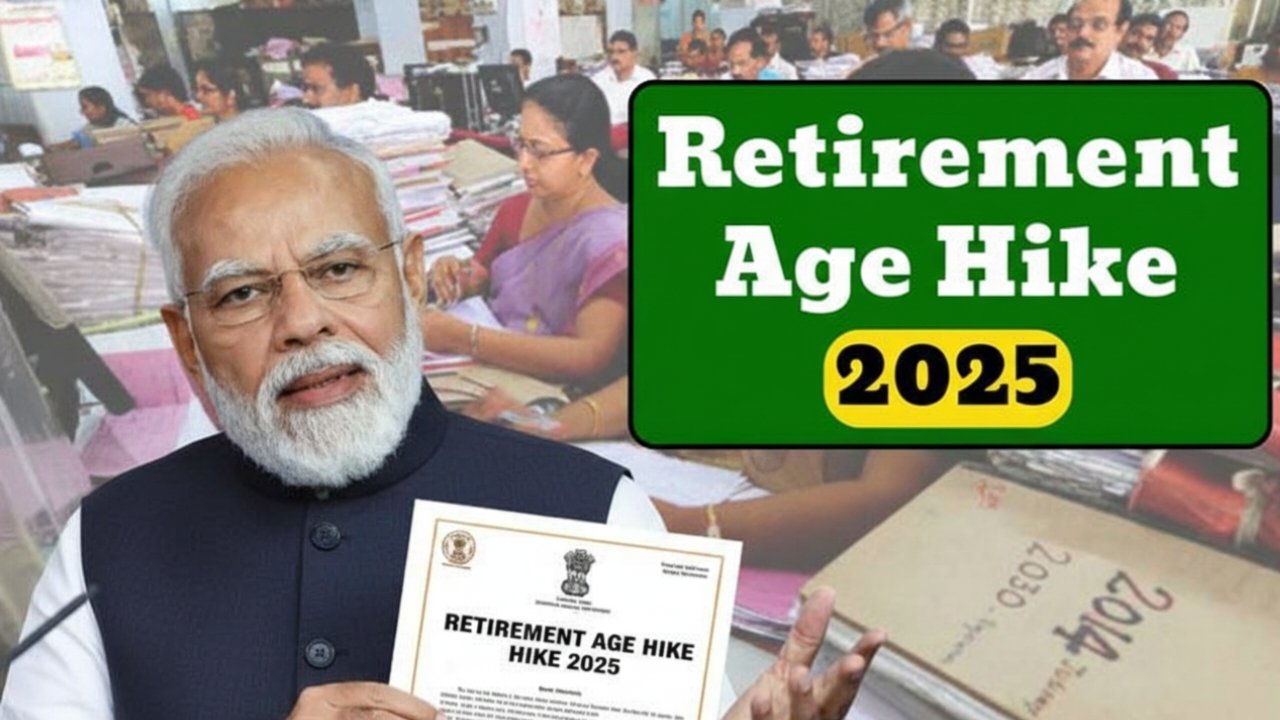
In recent days, there has been a swirl of rumors and viral messages across social media and WhatsApp claiming that the central government has decided to raise the retirement age of its employees from 60 years to 62 years, effective from April 2025. For many government servants — especially those nearing retirement — this prospect sounds like a welcome relief. On one hand, working two extra years could mean more savings, bigger pensions, and more time before retirement. On the other hand, such a big change would also have far-reaching implications for younger job-seekers, pension calculations, and government finances. But is there any real, official basis behind this claim? Or is it simply another case of misinformation gaining traction? In this article, we dig deep to expose the truth — using recent official statements, fact-checks, and reliable news sources — so that you have clarity on what is true and what remains rumor.
What Is the Viral Claim About Retirement Age 62?
The viral claim circulating widely states that a formal decision has been taken by the Union Cabinet to increase the retirement age of central government employees from 60 to 62 years, and that this change will come into effect from April 1, 2025. Memes, images of alleged official-looking notices, and “inside sources” have been shared widely with a sense of urgency. Employees, pensioners, and even social media groups have started celebrating — some hopeful about extended service and larger pensions, others skeptical about whether it’s real.
This loud wave of information spread fast, because it played on genuine concerns: rising inflation, longer life expectancy, and demand from senior staff to stay longer on duty. For many, 62 sounded like a fair compromise — giving older employees a few more years without extending indefinitely. But rumors often travel faster than facts. And before letting emotions take over, it’s essential to check: has the government really done anything to change the retirement age?
What Official Sources Say: No Change Yet
According to multiple fact-checks by trusted media and statements by official agencies — the answer is no. The retirement age remains 60, and there is no formal proposal or decision to raise it for central government employees.
The Press Information Bureau (PIB), the government’s main agency for public communications and fact-checking, has explicitly called the viral notices “fake.”
Earlier, in August 2023, during a session in the Lok Sabha, the government had confirmed that there was no proposal under consideration to change the retirement age for central employees.
Finally, as recently as March 2025 the government confirmed, in response to a question in Parliament, that there is still no move to alter retirement age — once again clarifying the status quo.
In short: despite all the headlines and viral forwards, there is no official decision to raise the retirement age to 62. The legal retirement age remains firm at 60 for now.
Why People Spread This Claim: What’s Fueling the Speculation?
Even though there is no official basis, why did the rumor catch on so strongly? Several factors contributed to its rapid spread:
- Emotional Appeal: For many older employees nearing 60, an extension to 62 is attractive — it means more working years, higher savings, and better pension calculations.
- Economic Reality: Rising inflation, increasing medical costs, and longer life expectancy make retirement at 60 feel insufficient to many. The idea of working a little longer resonates with those who want security in old age.
- Precedents in Some States or Departments: Occasionally some states or certain segments of employees (e.g. doctors, specialists) get extended service beyond 60 in special circumstances — this factual nuance often gets generalized and misrepresented.
- Social Media Amplification: A few well-designed but fake notices coupled with emotional posts make rumors more viral. Once such a claim spreads, confirmation bias leads people to accept it without checking verification.
- Confusion Between State and Central Employees: Many states have powers to revise retirement norms for their own employees. Such changes at state level sometimes get incorrectly projected as central government decisions, adding to the confusion.
Thus, while the idea of a retirement age hike appeals to many, the spread is more out of hope and fear than fact.
What Would a Real Increase to 62 Mean — Pros and Cons
If one day the government does consider raising retirement age to 62, there are important consequences — both positive and negative — to consider.
✅ Possible Advantages
- Experienced employees stay longer — institutional memory and expertise retained.
- Employees get two extra years of salary, pensionable service, retirement benefits — potentially greater financial security.
- Pension burden may get staggered over time; fewer immediate retirees could ease initial payout pressure.
- For older employees, inflation and cost of living remain high — a little more time in service could mean a better buffer.
⚠️ Potential Downsides and Challenges
- Delay in vacancies — younger aspirants may wait longer for their chance, causing backlog and perhaps demotivation.
- Pension liability may increase in long term — more retirees drawing pensions later, combined with inflation and longer life spans.
- Government’s budget and fiscal burden — longer-serving employees, delayed turnover, may reduce flexibility and raise cost.
- Inequity between states — if central government doesn’t increase but some states do, disparities across employees may increase.
- Union and labor unrest — younger employees or recruitment aspirants may protest delay in fresh hiring.
Therefore, it is a complex decision with multiple trade-offs. That may also explain why, so far, government has refrained from acting — balancing employee interests, fiscal discipline, and fairness in employment opportunities.
What’s the Status as of 2025: Summary
- No official proposal, order or cabinet decision to raise retirement age to 62 for central government employees.
- Retirement age remains 60 under Fundamental Rule 56(a).
- Social media posts / WhatsApp forwards claiming a hike are debunked by PIB and multiple fact-checks.
- Some state governments or departments may consider raising retirement age for their own staff — but that doesn’t impact central employees.
- Until there is a formal announcement or notification, retirement rules remain unchanged.
Why You Should Wait for Official Notification — Don’t Rely on Rumours
Given the stakes involved — service career, pension planning, financial decisions — one must rely only on verified official announcements. Here’s why:
- Only an order published via official channels (Gazette / Ministry / PIB) has legal weight. Forwarded notices or social media posts have no legal standing.
- Mistaken reliance can lead to false hopes — especially for those nearing retirement or planning finances accordingly.
- Future financial planning — pensions, PF withdrawals, alternate jobs — may get wrongly scheduled, causing stress.
- For younger aspirants or job-seekers, believing in a hike could keep them waiting unnecessarily.
In short, treat every viral claim with caution until it is confirmed by credible, official sources.
What Some State Governments Are Doing — And Why It’s Not the Same As Central Govt
It is important to note that a few state governments across India, under financial pressure or administrative reasons, sometimes discuss or implement temporary extensions or increased retirement age for certain categories of staff. For example, a recent article said that some state-level staff retirement age might be reconsidered due to budget or manpower crunch.
But the key difference is: employee rules at state level are governed by respective state governments — they cannot change the retirement rules for central employees. So even if a state increases age to 62 or 65 for its staff, it does not mean central government employees automatically get that benefit. Many rumors fail to explain this nuance — and that results in confusion.
Moreover, in Parliament the government has clarified that there is currently no proposal to change retirement age centrally.
Thus, until any official and legally valid order comes, the retirement age for central government employees remains 60.
What Employees Should Do Now — Advice & Practical Steps
If you are a government employee reading all these rumors, here’s what you should do:
- Don’t make major life or retirement plans based on unverified claims.
- Focus on existing retirement scheme benefits (pension, PF, pensionable service) assuming retirement at 60.
- Follow official sources: PIB, Ministry notifications, Gazette, official HR/cadre circulars.
- Younger colleagues should continue preparing for upcoming recruitments rather than delaying life decisions.
- If you are close to 60 — plan for the worst-case scenario (no increase), but also keep an eye on updates — be prepared gracefully, neither with false hope nor panic.
Responsible planning and realistic expectations are best when dealing with rumors.
FAQs — (Common Questions & Answers)
1. Has the government increased retirement age to 62 in 2025?
- No. There is no official decision or notification. Retirement age remains 60.
2. Are viral notices claiming 62 as retirement age real?
- No. They have been fact-checked and declared fake by official agency (PIB) and major media.
3. Can a state government increase retirement age for its employees?
- Yes — state governments manage their own employee rules. But any increase for state staff does not apply to central employees.
4. If a change happens, will everyone get benefit (including pensions)?
- Hypothetically yes, if a formal law or order passes. But this is speculative — nothing official yet.
5. Until then, what should employees assume?
- Assume retirement age remains 60; plan financials, investments and retirement accordingly.
Conclusion
The prospect of a retirement age hike to 62 in 2025 for central government employees sounded exciting to many — promising extra working years, better pensions, and financial security. But as things stand today, that remains a rumor. The government — via official channels — has confirmed multiple times that no such proposal is under consideration, and that retirement age remains 60. Social-media posts and viral notices claiming otherwise have no legal credibility and have been fact-checked and debunked.
While some state governments may consider extending age limits for their own staff, that does not impact central employees. Hence, for now, the realistic path is that retirement age remains unchanged. If there is any real change in future, it will happen only after official notification. Until then, employees — both senior and junior — should plan their careers and retirement assuming “60 years retirement age.”